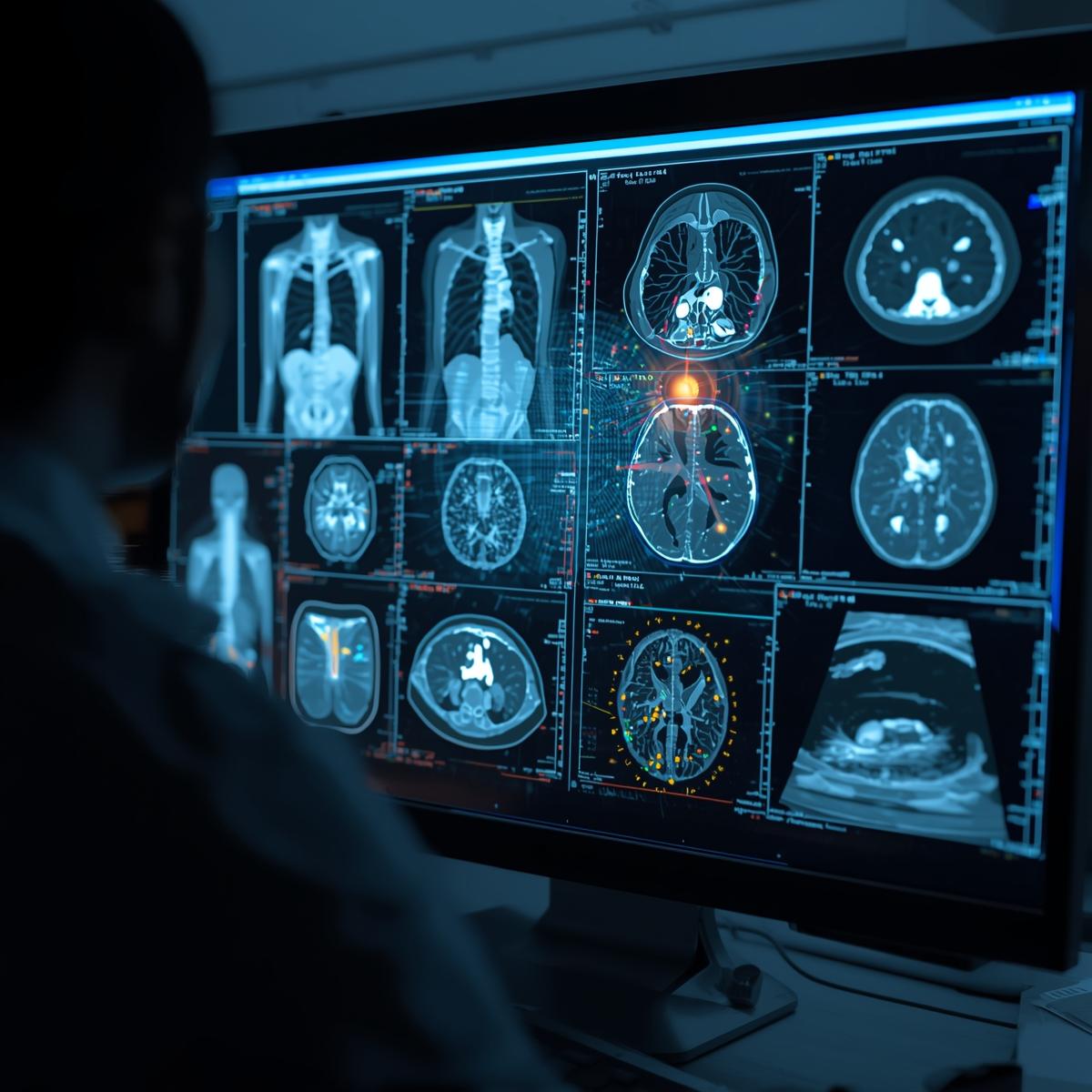
Here’s something that’ll blow your mind: AI can now spot certain types of cancer with over 94% accuracy. That’s not just matching what human doctors can do in many cases, it’s actually better. And faster, too.
But let’s be real for a second. When most people hear “AI in healthcare,” they either get super excited or completely freaked out. I get it. The idea of a computer making decisions about your health sounds like something straight out of a sci-fi movie.
The thing is, AI isn’t here to replace your doctor. Not even close. What’s actually happening in hospitals and clinics right now is way more interesting than that. Doctors are using AI as a ridiculously powerful assistant that helps them catch things they might miss, work through cases faster, and spend more time actually talking to patients instead of drowning in paperwork.
I’ve spent the last few years watching this technology transform healthcare from the inside, and honestly? We’re just getting started. This guide breaks down everything you need to know about AI in medicine the good stuff, the challenges, and what’s coming next.
- What is AI in Healthcare?
- Key Applications of AI in Healthcare
- Benefits of AI in Healthcare
- Challenges and Limitations
- Real-World Case Studies
- Leading AI Healthcare Companies
- Future of AI in Healthcare
- How to Implement AI in Healthcare Organizations
- Regulatory Landscape and Compliance
- Cost and ROI of Healthcare AI
- Frequently Asked Questions
- Conclusion
- Related Resources
What is AI in Healthcare?
Look, I could throw a bunch of technical jargon at you about machine learning algorithms and neural networks. But let’s start with what actually matters.
AI in healthcare is basically teaching computers to look at medical information the way a really experienced doctor would except the computer can look at thousands of cases in the time it takes a human to review just one. It learns from patterns in huge amounts of medical data and gets better at spotting problems over time.
Think about it this way: a radiologist might look at 50 chest X-rays in a day. An AI system can analyze 50,000 and remember every single one of them. But here’s the key difference from old-school medical software AI doesn’t just follow a checklist. It actually learns and adapts.
Types of AI Used in Medicine
Machine Learning
This is where computers learn from examples instead of being programmed with strict rules. Feed it 100,000 X-rays showing pneumonia, and it figures out what pneumonia looks like on its own. Pretty wild, right?
Deep Learning
Think of this as machine learning on steroids. It’s what powers most of the impressive AI you hear about like systems that can look at a medical image and spot a tumor smaller than a grain of rice.
Natural Language Processing
Ever notice how doctors spend forever typing notes? NLP is the AI that can listen to a doctor-patient conversation and automatically write up the visit notes. It understands medical language and can pull out the important stuff from pages of text.
Computer Vision
This is the AI that “looks” at medical images X-rays, CT scans, MRIs, even photos of your skin. It’s gotten scary good at spotting abnormalities that humans might miss.
Robotics and Automation
We’re talking surgical robots that don’t have shaky hands and can make incredibly precise movements. Lab equipment that processes thousands of samples without getting tired. That kind of thing.
How This is Different from Regular Medical Software
Your typical medical software is like following a recipe. If A happens, then do B. Simple, predictable, but not very smart.
AI is more like… imagine a doctor who’s seen millions of patients and remembers every single case. It can handle weird situations, spot patterns that aren’t obvious, and deal with the messy, complicated reality of healthcare.
That’s why AI can do things that were basically impossible before like predicting which patients are about to get really sick hours before they show symptoms, or discovering new drug candidates from billions of possible combinations.
Key Applications of AI in Healthcare
Alright, let’s get into the really cool stuff. Here’s where AI is making waves right now.

Medical Imaging and Diagnostics
This is probably the most mature area for healthcare AI, and for good reason. Computers are naturally good at analyzing images.
Radiology
Walk into most major hospitals these days, and there’s a good chance AI is helping read X-rays, CT scans, and MRIs. These systems flag suspicious areas, put urgent cases at the top of the pile, and give radiologists a heads-up about things they should take a closer look at.
I talked to a radiologist at a busy hospital who told me their AI catches about 2-3 things per week that the human reader initially missed. That’s 2-3 patients getting better care because of a computer double-checking.
Pathology
Looking at tissue samples under a microscope is tedious, precise work. AI can scan thousands of cells in minutes and spot the weird ones. Some systems can identify cancer cells, figure out how aggressive a tumor is, and catch rare diseases that even experienced pathologists might overlook.
Dermatology
There are now apps where you can take a photo of a suspicious mole with your phone, and AI will tell you if it looks concerning. Not perfect, but pretty useful if you live somewhere without easy access to a dermatologist.
Eye Diseases
Google’s DeepMind built an AI that can diagnose over 50 different eye diseases from retinal scans with 94% accuracy. That’s huge for catching things like diabetic retinopathy before they cause blindness.
The numbers back this up. Hospitals using AI imaging tools are reporting 30-50% faster diagnosis times and catching significantly more problems that might have been missed otherwise.
Drug Discovery and Development
Getting a new drug to market normally takes 10-15 years and costs over $2 billion. AI is changing that game completely.
Finding New Drugs
Instead of scientists testing millions of compounds in the lab one by one, AI can simulate how different molecules will behave. What used to take years now happens in weeks.
The Protein Folding Breakthrough
Okay, this one’s a big deal. Scientists struggled for 50 years to predict how proteins fold into 3D shapes. DeepMind’s AlphaFold basically solved it. Why does this matter? Because understanding protein shapes is key to designing drugs that work.
Making Clinical Trials Better
Finding the right patients for clinical trials can take forever. AI can scan through millions of patient records and identify people who match the criteria in a fraction of the time.
Finding New Uses for Old Drugs
During COVID, AI platforms like BenevolentAI looked through existing drugs to find ones that might work against the virus. Found some promising candidates way faster than traditional methods would have.
Companies using AI in drug discovery are cutting their early development time by 30-50%. That means new treatments reaching patients years sooner.
Predictive Analytics and Risk Assessment
This is where AI gets really interesting. Instead of just diagnosing problems after they happen, it can predict them before they start.
Patient Deterioration Prediction
Some hospitals now use AI that constantly monitors patient data vital signs, lab results, all of it and raises an alarm if someone’s about to crash. It can predict cardiac arrest or respiratory failure hours before it happens.
Hospital Readmission Risk
About 20% of Medicare patients end up back in the hospital within 30 days of being discharged. AI can identify who’s at highest risk so the care team can provide extra support and follow-up.
Sepsis Prediction
Sepsis kills over 270,000 Americans every year. The scary part? It can go from “patient seems fine” to life-threatening in hours. Epic’s Sepsis Model can predict it up to 12 hours early by analyzing dozens of subtle data points. Earlier detection means way better survival rates.
Disease Outbreak Forecasting
AI systems monitor everything from search trends to social media to travel patterns, looking for early signs of disease outbreaks. Some of these systems spotted COVID-19 spreading before official reports came out.
Virtual Health Assistants and Chatbots
I know what you’re thinking a chatbot for healthcare sounds terrible. But hear me out.
Symptom Checkers
Apps like Babylon Health and Ada Health use conversational AI to help you figure out if that weird pain is “go to the ER” serious or “take some Tylenol and chill” minor. They’re not perfect, but they help people make better decisions about when to seek care.
Medication Reminders
People not taking their meds as prescribed costs the healthcare system $300 billion a year and causes 125,000 deaths. AI assistants that remind people to take their medications and answer questions about side effects are actually making a dent in this problem.
Mental Health Support
Chatbots like Woebot provide cognitive behavioral therapy techniques and mood tracking. They’re not replacing human therapists but they’re giving people 24/7 access to mental health support, especially those who might not seek traditional therapy.
Studies show well-designed health chatbots can handle 70-80% of routine questions, which frees up nurses and staff to focus on the complex stuff that actually needs human judgment.
Robotic Surgery and Automation
Surgical robots with AI assistance are getting really sophisticated.
The da Vinci System
This is probably the most famous surgical robot. It translates a surgeon’s hand movements into super precise instrument movements, filters out hand tremors, and enables minimally invasive procedures. Patients typically have less blood loss, shorter hospital stays, and faster recovery.
AI Surgical Planning
Before complex surgeries, AI analyzes medical images to create detailed 3D models of a patient’s anatomy. Surgeons can practice the procedure virtually and plan the safest approach.
The complication rates for AI-assisted procedures are lower than traditional approaches. But let me be clear the surgeon is still doing the surgery. The robot is just a really advanced tool.
Electronic Health Records and Administration
This is the unglamorous but super important stuff. Administrative work eats up 20-30% of healthcare spending.
Clinical Documentation
AI that transcribes doctor-patient conversations in real-time and automatically generates clinical notes is saving doctors 50-70% of their documentation time. That’s hours per day they can spend with patients instead of staring at a computer screen.
Medical Coding and Billing
AI reads clinical notes and assigns the right diagnostic and billing codes. Reduces errors, speeds up billing, and helps hospitals get paid faster.
Prior Authorization
Getting insurance approval used to take days. AI can determine medical necessity, gather required documentation, and submit authorization requests in hours.
Healthcare organizations using AI for admin stuff report massive time savings and better financial performance.
Personalized Medicine and Treatment
One-size-fits-all medicine is on its way out. AI is making truly personalized healthcare possible.
Genomics and Precision Medicine
AI analyzes your genetic data to identify disease risks and predict how you’ll respond to different treatments. This is especially powerful in cancer care, where genetic tumor profiles guide which targeted therapy will work best.
Treatment Recommendation Systems
These analyze your medical history, lab results, genetic information, and millions of medical papers to suggest evidence-based treatment options. IBM Watson for Oncology is probably the most well-known example.
Pharmacogenomics
Ever wonder why some people get bad side effects from medications that work fine for others? AI can predict how you’ll metabolize drugs based on your genetics, helping doctors avoid adverse reactions and pick the right dosage.
Remote Patient Monitoring
AI-powered remote monitoring is letting people manage chronic conditions at home instead of constantly going to the hospital.
Wearable Device Analytics
Your smartwatch isn’t just counting steps. AI can detect irregular heart rhythms, predict diabetic episodes, and catch early signs of illness from subtle changes in your vital signs.
Chronic Disease Management
Platforms that monitor patients with diabetes, heart disease, or COPD can alert healthcare teams to concerning trends before they become emergencies. Some programs report 40-60% reductions in hospital admissions.
Elderly Care Monitoring
Sensors and AI track activity patterns in elderly people’s homes, detect falls, and identify behavior changes that might indicate health problems. Let’s people age in place while keeping them safe.
[Image: Remote Patient Monitoring – Elderly patient using smart home health monitoring system]
Benefits of AI in Healthcare
Let’s talk about why this matters. What’s actually getting better?
For Healthcare Providers
Fewer Mistakes
Medical errors are the third leading cause of death in the US 250,000 to 400,000 preventable deaths per year. AI acts as a safety net, catching things humans miss because we’re tired, distracted, or just dealing with too much information at once.
Getting Time Back
Doctors spend two hours on paperwork for every hour with patients. AI automation is giving them that time back. More patient face time, less clicking through screens.
Early Detection
AI is really good at spotting subtle patterns that indicate disease in early stages when it’s most treatable. Earlier cancer detection, earlier intervention for heart disease, earlier sepsis warnings all of this translates to lives saved.
Addressing Burnout
Healthcare worker burnout is at crisis levels. A lot of that comes from administrative burden and feeling like you’re drowning in tasks. AI that handles routine stuff and reduces documentation is actually helping with mental health.
For Patients
Faster Answers
AI-assisted diagnostics can provide results in minutes instead of hours or days. When you’re sick or scared, faster answers matter.
Better Accuracy
Multiple studies show AI matching or beating specialist-level performance in diagnostic tasks. More accurate diagnoses mean better treatment.
Treatments That Actually Fit You
Instead of trying the standard protocol and hoping it works, AI enables treatments tailored to your specific genetics, lifestyle, and health history.
Better Access
Virtual health assistants, telemedicine AI, and remote monitoring bring healthcare to rural areas and underserved communities. AI is democratizing access to medical expertise.
Lower Costs
Earlier disease detection, fewer complications, shorter hospital stays, and operational efficiencies all translate to lower costs. The savings are real.
For Healthcare Systems
Cost Reduction
Healthcare systems using AI report 10-20% operational cost reductions through better efficiency and less waste. That’s billions of dollars annually across the industry.
Better Outcomes
Better diagnoses, earlier interventions, and personalized treatments lead to improved patient outcomes across the board. Lower mortality rates, fewer complications, higher patient satisfaction.
Population Health
AI can analyze population-level data to spot health trends, target interventions, and allocate resources effectively. Critical for managing chronic diseases and preventing outbreaks.
Challenges and Limitations
Okay, real talk time. AI in healthcare isn’t all sunshine and roses. There are legitimate concerns and obstacles.
Technical Challenges
Data is Messy
AI is only as good as the data it learns from. Healthcare data is often incomplete, inconsistent, or locked away in systems that don’t talk to each other. Missing information, documentation errors, and data entry mistakes all degrade AI performance.
Systems Don’t Talk to Each Other
Data exists in silos across different hospitals, clinics, labs, and insurance companies. Getting everything connected and standardized is hard. Really hard.
Bias is a Real Problem
If the data used to train AI underrepresents certain groups, the AI will perform poorly for those people. Studies have found racial, gender, and socioeconomic biases in healthcare AI systems. This isn’t theoretical it’s happening now and needs to be fixed.
The Black Box Problem
Many AI systems, especially deep learning models, are “black boxes.” They give you an answer but can’t explain their reasoning. In healthcare, understanding why a diagnosis was made is often as important as the diagnosis itself.
Regulatory and Compliance Challenges
FDA is Still Figuring This Out
The FDA wasn’t designed to regulate software that learns and updates itself. The approval process for AI is still evolving, creating uncertainty for developers and hospitals.
HIPAA Compliance
AI systems processing patient data must comply with strict privacy regulations. Cloud-based AI, data sharing for training, third-party AI servicesall of this raises complex compliance questions.
Who’s Liable When AI Screws Up?
If an AI system makes a wrong diagnosis and someone gets hurt, who’s responsible? The developer? The hospital? The doctor who followed the AI’s recommendation? The legal system hasn’t figured this out yet.
Ethical Considerations
Privacy Concerns
AI requires massive amounts of patient data. Protecting privacy while enabling AI development is tricky. Data breaches, unauthorized access, and re-identification of anonymized data are serious risks.
Job Displacement
Some healthcare jobs will change or disappear because of AI. Radiologists, pathologists, and administrative staff are understandably worried. The reality is probably more about roles evolving than mass unemployment, but the transition will be bumpy.
Access Inequality
Advanced AI systems are expensive. There’s a real risk that AI widens healthcare disparities wealthy institutions benefit while underfunded hospitals and underserved communities get left behind.
Implementation Barriers
It’s Expensive
Implementing AI requires significant upfront investment. Small hospitals and clinics may struggle to afford it.
Integration is Hard
Healthcare IT environments are complicated, with multiple legacy systems. Adding AI to this mix is technically challenging and expensive.
Change is Scary
Healthcare is conservative (for good reason patient safety matters). Some clinicians are skeptical of AI, worried about overreliance on technology, or concerned about liability. Building trust takes time.
Despite all this, AI is becoming integral to healthcare. The key is addressing these challenges responsibly instead of ignoring them.
Real-World Case Studies
Let me show you some actual examples of AI in action.
Case Study 1: Mayo Clinic – AI for ECG Analysis
The Problem
Ventricular dysfunction (basically, your heart’s pumping ability getting weaker) often goes undetected until people develop serious symptoms. Standard ECGs can detect heart rhythm problems but usually miss subtle signs of ventricular dysfunction.
What They Did
Mayo Clinic developed a deep learning algorithm that analyzes ECGs to detect left ventricular dysfunction with high accuracy even when the ECG looks totally normal to human eyes. They trained it on over a million ECGs paired with echocardiogram results.
The Results
The AI hit 85-90% accuracy in identifying ventricular dysfunction from ECG traces. In clinical testing, it caught dysfunction in patients whose ECGs were read as normal by cardiologists.
Why This Matters
This tool can screen millions of patients cheaply, identifying those who need echocardiograms for confirmation and treatment. It’s pulling hidden information from a test we’re already doing. Smart.
Case Study 2: Mount Sinai – Predicting Hospital Readmissions
The Problem
Hospital readmissions within 30 days cost the US healthcare system over $26 billion annually. If you could predict who’s likely to bounce back, you could intervene and prevent it.
What They Did
Mount Sinai built an AI system that analyzes electronic health record data to predict readmission risk. The model looks at hundreds of variables vital signs, lab results, medications, social factors, and clinical notes.
The Results
The model achieved 75% accuracy in identifying high-risk patients. When they integrated it into workflows, care teams could provide intensive discharge planning and follow-up to those most likely to be readmitted.
The Impact
Mount Sinai saw a 20% reduction in readmissions among high-risk patients getting AI-guided interventions. That’s about $2,000 saved per prevented readmission, plus better outcomes for patients.
The Lesson
Accurate AI is necessary but not sufficient. Success requires effective clinical workflows. Care coordinators used AI predictions to guide their work, combining algorithmic insights with human judgment.
Case Study 3: Stanford – AI-Assisted Radiology
The Problem
There aren’t enough radiologists, and imaging volumes keep growing. This creates delays and increases the risk of missed findings.
What They Did
Stanford implemented computer vision AI to assist radiologists with chest X-ray interpretation. The AI analyzes images for abnormalities and flags urgent cases for immediate attention.
The Results
Radiologists using the AI assistant reduced interpretation time by 30% for routine cases while maintaining high accuracy. The AI caught findings they might have missed.
Why Radiologists Actually Like This
The system helped Stanford manage growing volumes without adding staff. But maybe more importantly, radiologists reported better job satisfaction the AI handles routine cases, letting them focus on complex cases that need human expertise.
Case Study 4: UK NHS – COVID-19 Response
The Challenge
During COVID, the NHS faced overwhelming patient volumes and needed to quickly identify patients at risk for severe outcomes.
What They Did
NHS partnered with AI companies to rapidly develop algorithms that predicted COVID patient deterioration risk using EHR data. The AI analyzed vital signs, demographics, comorbidities, and lab results to generate risk scores.
The Results
The AI risk scores helped clinicians make faster triage decisions who needs ICU monitoring versus standard care. Hospitals using the AI reported better resource allocation and earlier interventions for high-risk patients.
The Takeaway
The pandemic showed AI’s potential for rapid deployment in crises. But it also highlighted the importance of validating algorithms across diverse populations early COVID AI models sometimes performed poorly for certain demographic groups.
Leading AI Healthcare Companies
The healthcare AI landscape is crowded with players. Here are the major ones you should know about.
Medical Imaging AI
Aidoc – Specializes in radiology AI for emergencies. Detects intracranial hemorrhages, pulmonary embolisms, and other acute findings. FDA-cleared and deployed in hundreds of hospitals.
Zebra Medical Vision – Offers a comprehensive AI imaging library covering multiple conditions. Their algorithms detect everything from bone fractures to liver disease.
PathAI – Focuses on AI-assisted pathology, particularly in oncology. Helps pathologists diagnose diseases from tissue samples more accurately.
Imagen Technologies – Provides AI for cardiovascular imaging, analyzing echocardiograms and cardiac MRIs.
Drug Discovery AI
Insilico Medicine – Leader in AI-powered drug discovery. Uses generative AI to design novel drug molecules. They’ve got AI-designed drugs now in clinical trials.
Atomwise – Screens billions of compounds computationally using AI to predict drug-target interactions. Partnerships with major pharma companies.
BenevolentAI – Combines AI with biomedical knowledge to identify and repurpose drugs. They identified baricitinib as a potential COVID treatment during the pandemic.
Exscientia – Pioneered AI-designed drugs entering clinical trials. Their platform automates drug design cycles.
Clinical Decision Support
IBM Watson Health – Despite some setbacks, IBM continues developing AI for clinical decision support, genomics, and imaging.
Epic Systems – The leading EHR vendor has embedded AI tools including sepsis prediction and deterioration alerts. Their reach across US healthcare makes them highly influential.
Cerner (Oracle Health) – Another major EHR vendor integrating AI for population health, predictive analytics, and clinical decision support.
Virtual Health
Babylon Health – AI-powered symptom checking, virtual consultations, and health monitoring. Widely used in the UK and internationally.
Ada Health – Symptom assessment app that’s completed millions of evaluations globally.
Buoy Health – AI health assistant that guides users through symptom assessment to appropriate care pathways.
Woebot Health – Provides AI-based mental health support using cognitive behavioral therapy techniques.
Hospital Operations
Olive AI – Automates healthcare administrative tasks like prior authorization and claims processing.
Notable Health – AI for patient intake, registration, and documentation automation.
Qventus – Provides AI-powered operational analytics for hospitals, optimizing patient flow and capacity management.
This is just scratching the surface. New companies and innovations keep emerging.
Future of AI in Healthcare
Where is all this headed? Here’s what’s coming.
Emerging Trends
AI in Mental Health
Beyond basic symptom checking, we’re moving toward AI-guided therapy, mood tracking, and crisis intervention. Digital therapeutics using AI could expand mental health access dramatically.
Nanotechnology Meets AI
Imagine nanobots guided by AI navigating your bloodstream to deliver drugs precisely to tumor cells. Or biosensors continuously monitoring biomarkers and adjusting treatment automatically. Sounds like sci-fi, but it’s being developed now.
Brain-Computer Interfaces
AI-powered brain-computer interfaces are already helping paralyzed patients control prosthetics and communicate. As this matures, it could restore movement and independence to people with severe disabilities.
Quantum Computing + AI
Quantum computers combined with AI could simulate molecular interactions at scales impossible today. This might crack currently incurable diseases. Still experimental, but promising.
Federated Learning
This allows AI models to train on distributed data without centralizing sensitive information. Healthcare organizations could collaborate on AI development while maintaining patient privacy.
AI for Global Health
AI has huge potential for developing countries with healthcare workforce shortages. Mobile health apps with AI diagnostics and decision support could bring quality healthcare to billions currently lacking access.
Market Projections
The global healthcare AI market is exploding. Analysts project it’ll hit $150-200 billion by 2030, up from about $15 billion in 2023. That’s 35-40% annual growth.
Venture capital is pouring into healthcare AI startups. Major tech companies Google, Microsoft, Amazon, Apple are all making big healthcare AI bets.
Timeline for Mainstream Adoption
2025-2027: Integration Phase
AI becomes standard in radiology, pathology, and drug discovery. Most large hospitals deploy multiple AI applications. EHR vendors embed more AI capabilities.
2027-2030: Expansion Phase
AI expands into primary care, mental health, and home monitoring. Virtual health assistants get sophisticated enough to handle complex interactions. Personalized medicine guided by AI becomes routine.
2030-2035: Transformation Phase
Healthcare becomes fundamentally AI-enabled. Continuous monitoring through wearables allows truly predictive, preventive care. Most medical specialties integrate AI as standard practice.
Potential Breakthroughs
Universal Disease Detection – AI that can detect diseases across multiple body systems from a single comprehensive test.
AI Drug Design at Scale – Dozens of AI-designed drugs entering clinical trials simultaneously, dramatically accelerating pharmaceutical innovation.
True Precision Medicine – Treatment protocols uniquely tailored to each individual’s complete biological profile.
Predictive Prevention – Predicting diseases years in advance and preventing them rather than treating after illness strikes.
The future of healthcare is increasingly intertwined with AI. We’re moving toward more accurate, accessible, affordable, and personalized medicine.
How to Implement AI in Healthcare Organizations
Thinking about bringing AI into your hospital or clinic? Here’s how to do it right.
Step 1: Figure Out What You Actually Need
Don’t implement AI just because it’s trendy. Start by identifying real problems where AI could help.
Ask yourself:
- What processes are inefficient or error-prone?
- Where are clinical outcomes below where they should be?
- What operational bottlenecks exist?
- Which staff members are drowning in work?
- What patient satisfaction issues need addressing?
Set concrete goals. “Reduce diagnostic turnaround time by 30%” or “decrease readmissions by 20%” or “save staff 10 hours weekly on documentation.”
Calculate ROI upfront. AI requires investment, but estimate potential savings from better efficiency and outcomes.
Step 2: Get Your Data House in Order
AI needs data lots of it, well-organized and accessible.
Audit what you have. Assess the quality and completeness of your health data. Identify gaps and inconsistencies.
Clean it up. Implement processes for maintaining accurate, complete medical records. Garbage in, garbage out.
Set up governance. Create policies for data access, use, and security. Ensure HIPAA compliance.
Make systems talk to each other. AI often needs information from multiple sources.
Step 3: Choose the Right Solution
Most healthcare organizations should buy proven vendor solutions rather than building custom AI.
When evaluating vendors, look for:
- FDA clearance or CE marking
- Published clinical validation studies
- Integration capabilities with your systems
- Implementation support and training
- Ongoing maintenance included
- Customer references from similar organizations
- Realistic total cost of ownership
- Strong data security and HIPAA compliance
- Vendor stability
Request demonstrations with your actual use cases. Many vendors offer pilot programs.
Step 4: Start Small with a Pilot
Don’t go organization-wide immediately. Pilot in one department or use case first.
Pick something where AI can show clear value quickly. Radiology, ED triage, or administrative automation are common starting points.
Define success metrics before you start. Track the same metrics during the pilot to quantify impact.
Plan for 3-6 months long enough to gather meaningful data, short enough to maintain momentum.
Collect feedback constantly from staff using the AI. Their insights are gold.
Be honest about results. Failures are learning opportunities.
Step 5: Invest in Your People
Technology alone doesn’t drive success. Your team does.
Provide comprehensive training on not just how to use the AI, but how to interpret its outputs and understand its limitations.
Address concerns head-on. Some staff will worry about AI replacing jobs or question its reliability. Create forums for discussion and emphasize AI’s role in augmentation.
Find clinical champions respected clinicians who believe in the project. Their advocacy drives adoption among peers.
Work with frontline staff to integrate AI smoothly into existing workflows. Poorly integrated AI creates frustration.
Provide accessible help and responsive support during and after implementation.
Step 6: Scale Thoughtfully
After a successful pilot, expand incrementally.
Document what worked and what didn’t. Apply these lessons to subsequent rollouts.
Add departments or use cases gradually rather than all at once. This lets you maintain quality and support.
Monitor AI performance continuously. Algorithms may need retraining as patient populations or practices change.
Keep improving. AI implementation is never “done.”
Share success stories to build organizational enthusiasm.
Plan for long-term evolution. Healthcare AI is advancing rapidly stay informed and plan for technology refreshes.
Regulatory Landscape and Compliance
Let’s talk about the rules and regulations around healthcare AI.
FDA Regulation of AI Medical Devices
The FDA regulates AI/ML-based software as medical devices when they diagnose, treat, cure, mitigate, or prevent disease.
Software as a Medical Device
AI diagnostic tools, clinical decision support systems that recommend treatments, and certain predictive analytics fall under SaMD regulations requiring FDA clearance before marketing.
Risk-Based Classification
The FDA classifies AI medical devices as Class I (low risk), Class II (moderate risk), or Class III (high risk). Most AI diagnostic tools are Class II, requiring 510(k) premarket notification.
Predetermined Change Control Plans
The FDA is developing frameworks allowing AI manufacturers to make predetermined algorithm changes after approval without new submissions crucial for AI that improves through learning.
Over 500 AI/ML-enabled medical devices have received FDA clearance, including IDx-DR for diabetic retinopathy (first autonomous AI diagnostic), Aidoc’s radiology tools, and various mammography systems.
HIPAA Compliance
AI systems processing protected health information must comply with HIPAA privacy and security rules.
Key requirements include business associate agreements with AI vendors, risk assessments, administrative and technical safeguards, encryption, access controls, audit logging, and breach notification procedures.
Cloud-based AI is common. Ensure cloud providers sign business associate agreements and implement appropriate safeguards.
Training AI often requires large datasets. Properly de-identified data isn’t subject to HIPAA restrictions, but de-identification must meet regulatory standards.
International Regulations
The EU’s Medical Device Regulation classifies AI software as medical devices requiring CE marking. The EU AI Act will impose additional requirements on high-risk AI systems including medical applications.
GDPR affects healthcare AI regarding consent for data processing, rights to explanation of automated decisions, and data portability.
Countries including Canada, Australia, Japan, and Singapore have developed or are developing AI-specific healthcare regulations.
Best Practices
Document everything AI system validation, performance monitoring, algorithm changes, and clinical integration.
Establish oversight committees including clinicians, IT staff, compliance officers, and legal counsel to review AI implementations.
Conduct periodic audits of AI systems for compliance, performance, and security.
Stay informed AI healthcare regulations are evolving rapidly.
For novel AI applications, consider pre-submission meetings with regulators to clarify pathways.
Cost and ROI of Healthcare AI
Let’s talk money. What does this actually cost, and is it worth it?
What You’ll Actually Pay
Costs vary wildly based on what you’re implementing.
Software Licensing
SaaS AI platforms typically charge $50,000 to $500,000+ annually for hospital-wide licenses. Per-study pricing (common for imaging AI) runs $1-20 per scan. Some vendors offer value-based pricing tied to outcomes.
Infrastructure
Cloud-based AI minimizes infrastructure investment. On-premises AI may require GPU servers costing $50,000-200,000.
Integration
Connecting AI with EHRs and other systems requires IT resources. Custom integration can cost $50,000-300,000 depending on complexity.
Training
Budget $25,000-100,000 for comprehensive training programs for organization-wide deployments.
Ongoing Maintenance
Annual maintenance typically costs 15-20% of initial licensing fees.
Personnel
Large organizations may hire AI specialists or data scientists. Salaries range from $100,000-200,000 annually.
Hidden Costs
Don’t forget about workflow redesign, additional hardware, data quality improvement projects, and productivity dips during initial adoption.
Real ROI Examples
Let me give you some actual numbers.
Radiology AI
A 300-bed hospital spends $150,000 annually on radiology AI. Here’s what they get back:
- 30% faster reading times means handling 20% more studies without hiring more staff: $200,000 value
- Catching missed findings prevents 2 lawsuits over 5 years: $1 million+ value
- Better job satisfaction reduces radiologist turnover: $100,000+ value
Payback period? Under 1 year.
Sepsis Prediction
A 400-bed hospital pays $100,000 annually for sepsis AI. The returns:
- 20 prevented sepsis cases at $25,000 cost reduction each: $500,000 saved
- 2 prevented deaths avoiding wrongful death claims: Priceless
Payback period? 2-3 months.
Clinical Documentation AI
Costs $200,000 annually but saves:
- 15 minutes per physician per day × 50 physicians × 250 days = 3,125 hours
- At $200/hour physician time value: $625,000 productivity gain
- Better coding accuracy: $100,000 additional revenue
Payback period? 4-6 months.
Patient Engagement Chatbot
$80,000 annual cost reduces call center volume by 30%:
- 2 FTE call center staff eliminated: $100,000 saved
- Better patient satisfaction leads to 5% retention improvement: $200,000 value
Payback period? Under 1 year.
What Affects Your ROI
Size Matters
Larger organizations typically get better ROI due to economies of scale. A $100,000 radiology AI system provides way better value for a hospital reading 100,000 studies annually than one reading 10,000.
Starting Point
If you’ve got significant inefficiencies, you’ll see bigger improvements. Already-efficient organizations may see smaller gains.
Integration Quality
Well-integrated AI that fits seamlessly into workflows delivers way more value than clunky solutions that create friction.
Change Management
Organizations that invest in training and adoption see faster time-to-value and better utilization.
Use Case Selection
Some applications deliver faster, clearer ROI than others. Start with high-value use cases.
Finding Money for AI
Vendor Financing
Many AI vendors offer flexible payment terms, outcomes-based pricing, or pilot programs to reduce upfront costs.
Grants
Federal agencies, foundations, and research institutions sometimes fund healthcare AI pilots. Academic medical centers may access research grants.
Value-Based Care Incentives
Some payers offer shared savings arrangements or incentive payments for implementing technologies that improve outcomes or reduce costs.
Bottom line? AI requires investment, but ROI for well-selected applications is typically strong, with payback periods of 6-24 months common. The long-term value extends beyond money to better patient outcomes, happier staff, and competitive positioning.
Frequently Asked Questions
Is AI going to replace doctors?
No. Full stop.
Look, I get why people worry about this. But AI is a tool that makes doctors better at their jobs it’s not a replacement for them.
AI is amazing at analyzing data and spotting patterns. But medicine requires empathy, communication, ethical judgment, and complex reasoning that AI can’t do. When was the last time you wanted a computer to deliver bad news or help you make a difficult treatment decision?
What AI will change is how doctors spend their time. Less data entry and routine analysis, more time on complex cases and patient interaction. Some specialties will evolve significantly radiology and pathology in particular but human expertise remains essential.
The most effective healthcare combines AI’s analytical power with human judgment, creativity, and compassion. That’s the future we’re actually building.
How accurate is medical AI compared to doctors?
It depends on what you’re measuring.
In narrow, well-defined tasks like detecting specific abnormalities in medical images, AI often matches or beats specialist performance. Some studies show AI hitting 90%+ accuracy diagnosing diabetic retinopathy, certain cancers, and other conditions.
But here’s the thing these comparisons can be misleading. AI performs well in controlled settings with high-quality data. Throw it an unusual case, poor image quality, or something outside its training? It might completely bomb.
Doctors bring breadth of knowledge, ability to synthesize information across systems, and adaptability to novel situations that AI lacks.
The best approach? AI plus human teams outperform either alone. AI provides rapid initial analysis and catches things humans might miss. Physicians provide context, judgment, and final decisions.
Is patient data safe with AI systems?
Depends on who’s implementing it.
Reputable healthcare AI systems use robust security encryption, access controls, audit logging, HIPAA compliance protocols. Leading vendors undergo regular security audits.
But AI does introduce some considerations. Training AI requires large datasets. Cloud-based AI means data leaves on-premises servers. Adversarial attacks could potentially mess with AI outputs.
Healthcare organizations need to thoroughly vet AI vendors’ security practices, ensure business associate agreements are in place, implement strong access controls, and maintain comprehensive data governance.
When properly implemented, AI can be as secure as other healthcare IT systems. The key word is “properly.”
How much does healthcare AI actually cost?
The range is huge.
Small-scale stuff: $10,000-50,000 annually for focused applications like chatbots or specific admin automation
Department-level: $50,000-200,000 annually for radiology AI, pathology assistants, or clinical decision support for one department
Enterprise solutions: $200,000-1,000,000+ annually for comprehensive platforms covering multiple use cases
Per-use pricing: Some charge per interaction $1-20 per imaging study or $0.50-2 per patient encounter
Implementation and integration can add 50-100% to software costs in year one. But ROI typically justifies investment within 1-2 years for well-chosen applications.
Can AI diagnose rare diseases?
It’s getting there, but it’s tricky.
Rare diseases by definition affect few patients, which means limited training data. That’s a problem for AI.
But AI’s ability to process massive amounts of medical literature and recognize subtle patterns could help identify rare conditions that physicians might not think of.
Several projects are working on this. IBM Watson has identified rare genetic conditions. AI systems analyzing genomic data have discovered ultra-rare mutations explaining mysterious symptoms.
The future probably involves AI as a backup suggesting rare disease possibilities when common diagnoses don’t fit, guiding genetic testing, or connecting patients with specialized experts.
What are the biggest AI healthcare success stories?
A few stand out:
Google’s DeepMind for Eye Disease – AI detecting disease with 94% accuracy, potentially preventing blindness in millions worldwide
AlphaFold Protein Folding – Solving a 50-year-old biology challenge, accelerating drug discovery massively
Mayo Clinic’s ECG AI – Detecting heart dysfunction from normal-appearing ECGs, enabling early intervention
Sepsis Prediction Systems – Reducing sepsis deaths by 20-30% through early warning at multiple hospitals
BenevolentAI COVID Drug Discovery – Identifying treatment candidates during the pandemic through rapid AI analysis
These show AI’s potential across diagnostics, research, prevention, and treatment.
How long does implementation take?
Varies by complexity.
Simple stuff: 1-3 months for basic chatbots, admin automation, or standalone tools with minimal integration
Moderate complexity: 3-6 months for imaging AI, clinical decision support, or tools requiring EHR integration and workflow changes
Complex enterprise deployments: 6-12+ months for comprehensive platforms spanning multiple departments
Pilot programs typically run 3-6 months before full rollout. Actually realizing full benefits may take 12-24 months as staff get proficient and workflows optimize.
Organizations with mature IT infrastructure, strong project management, and executive support implement faster.
What medical specialties benefit most from AI?
Some specialties are seeing huge AI impact:
Radiology – AI excels at analyzing medical images. Computer vision identifies abnormalities, prioritizes urgent cases, quantifies disease progression. This is probably the most AI-transformed specialty right now.
Pathology – Digital pathology with AI accelerates diagnosis, improves consistency, handles massive data from genetic testing.
Oncology – Cancer care benefits from AI-guided treatment selection, clinical trial matching, radiology analysis, genomic interpretation.
Cardiology – AI interprets ECGs, echocardiograms, cardiac imaging, predicts cardiovascular events, optimizes treatment.
Emergency Medicine – Triage AI, sepsis prediction, rapid diagnostic support for time-pressured ER docs.
But honestly? Every specialty is finding AI applications surgery planning, mental health support, primary care decision assistance, you name it.
Do insurance companies cover AI-assisted procedures?
Coverage is evolving and kind of messy right now.
Most payers don’t separately reimburse for AI they pay for the underlying medical service regardless of whether AI was used.
If AI helps read a chest X-ray, insurers pay for the X-ray interpretation at standard rates. The hospital absorbs AI costs as a business expense, justifying it through better efficiency or quality.
Some exceptions:
- Certain AI diagnostic tests (like IDx-DR for diabetic retinopathy) have specific reimbursement codes
- Value-based care contracts may reward AI adoption that improves outcomes or cuts costs
- Some innovative payers are piloting AI-specific reimbursement
The reimbursement landscape will evolve as AI becomes standard practice.
Where is healthcare AI headed in the next 5 years?
Here’s what’s coming:
Broader adoption – AI expanding from specialized applications to routine use in primary care, mental health, preventive medicine
Multimodal AI – Systems integrating multiple data types imaging, genomics, EHR data, wearables for comprehensive analysis
Predictive focus – More emphasis on predicting health events before they occur rather than diagnosing after symptoms
Personalization – Increasingly granular treatment recommendations based on individual genetics, environment, lifestyle
Autonomy – More fully autonomous AI handling defined tasks without human intervention (with oversight)
Accessibility – AI expanding healthcare access in rural areas, developing countries, underserved communities
Integration – AI embedded in standard healthcare IT infrastructure rather than standalone add-ons
The trajectory? AI becoming as fundamental to healthcare as the stethoscope a standard tool used daily without thinking it’s remarkable.
Conclusion
AI is fundamentally changing healthcare. We’re past the experimental phase this technology is becoming essential.
The benefits are real. Fewer errors. Better efficiency. Improved outcomes. Broader access to quality care. These aren’t just promises anymore they’re happening in hospitals right now.
But challenges remain. Data quality issues, regulatory uncertainty, algorithmic bias, equitable access. Responsible AI implementation means paying attention to these problems, not ignoring them.
For healthcare organizations, the question isn’t whether to adopt AI but how to do it strategically. Start with focused applications addressing real problems. Build strong data foundations. Invest in training and change management. Continuously evaluate outcomes.
For patients, AI promises more accurate diagnoses, personalized treatments, better access to care. AI won’t replace the human touch that’s essential to healing. But it will empower healthcare providers to deliver better care more efficiently.
The future of healthcare is human expertise augmented by artificial intelligence. Combining machine analytical power with human wisdom, empathy, and judgment. Organizations embracing this partnership thoughtfully will lead healthcare into a more effective, accessible, and equitable future.
Healthcare has always been about people helping people. AI is just giving us better tools to do that job. And honestly? That’s pretty exciting.
Related Resources
Explore more about AI in healthcare: